


Providing the Right Bathroom Support at Every Stage

As dementia progresses, familiar daily routines can become increasingly difficult. Bathroom use is one area where changes in memory, judgment, communication, and physical abilities can affect independence. Understanding dementia bathroom care by stage helps caregivers adapt their approach while protecting comfort, privacy, and dignity.

Adapting Support Through Each Stage

Normal Aging:

People generally manage bathroom routines independently. Occasional forgetfulness is common, but assistance is usually not required.

Early-Stage Dementia:

Individuals can typically recognize the bathroom and complete the necessary steps. However, memory and attention changes may require verbal reminders or simple notes. Understanding dementia-related toileting changes early can help caregivers provide support without taking away independence.

Middle-Stage Dementia:

As confusion increases, multi-step bathroom tasks can become difficult. Toileting needs across dementia stages may include simple, one-step instructions, predictable routines, and gentle physical or tactile cues. Caregivers should allow enough time for the person to understand and respond.

Late-Stage Dementia:

Greater supervision and hands-on support are often needed. Bathroom guidance for dementia patients may include gestures, familiar sensory cues, and reassuring facial expressions or body language. A calm tone can help the person feel safe.

End-Stage Dementia:

Complete assistance with personal care may be required. At this stage, comfort, safety, cleanliness, and reassurance become the priority. Adapting personal care for dementia means responding to the person’s abilities while providing respectful support.

Preserving Dignity at Every Stage

Maintaining privacy in dementia care is essential throughout bathroom assistance. Close doors and provide appropriate covering while allowing the person to participate in whatever they can still manage.

As abilities change, support may progress from reminders to guidance, hands-on assistance, and eventually complete care. By adapting support with patience and compassion, caregivers can help make bathroom routines safer, more comfortable, and dignified at every stage of dementia.

Promote dignity, comfort, and compassionate care with CARES® Training. Save 10% with code SummerFun through September 30, 2026.

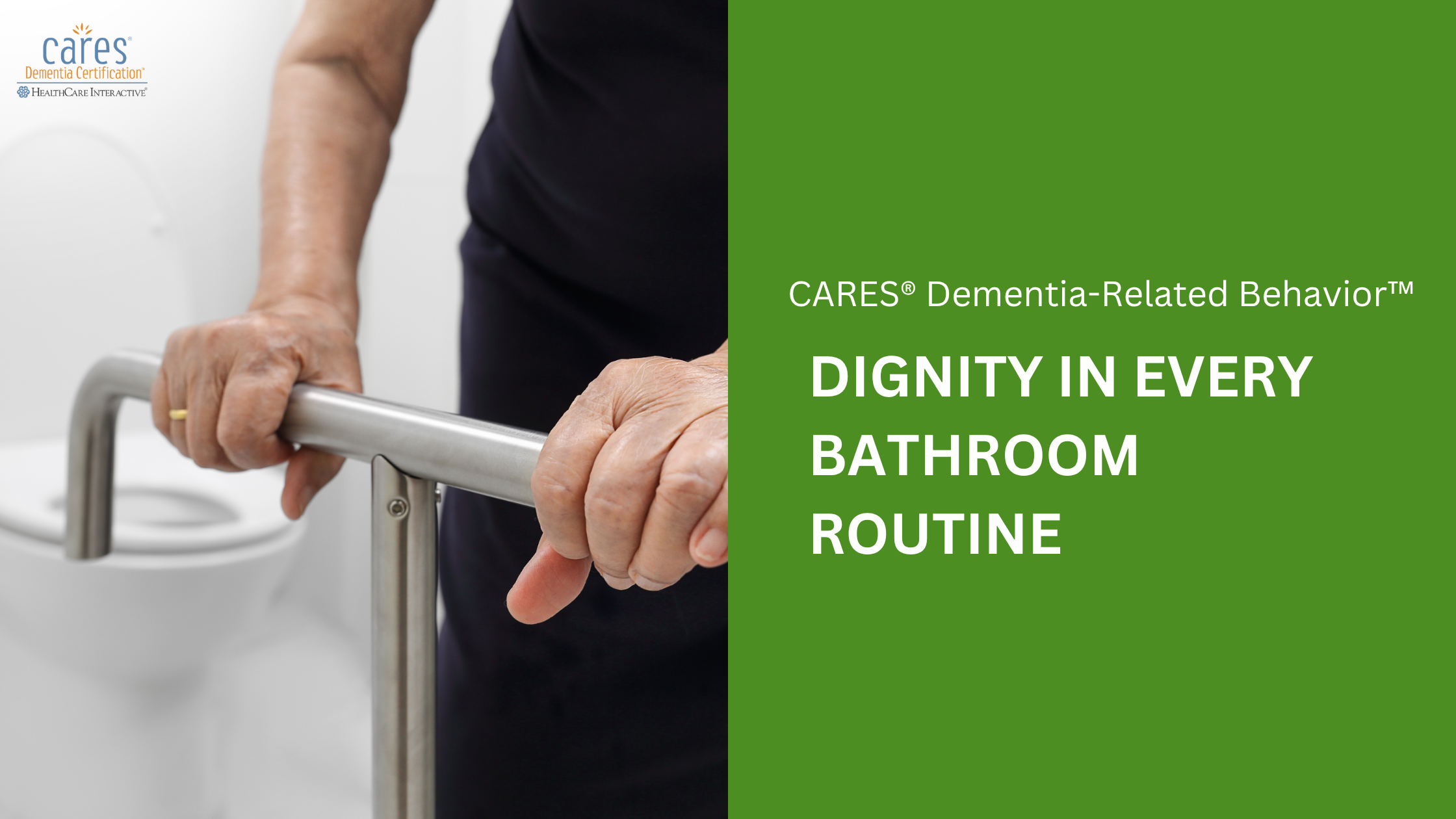
Compassionate Support for Toileting in Dementia

For a person living with dementia, needing help with toileting can be an emotional and difficult change. What was once a private, independent routine may gradually require caregiver assistance. Using a calm, respectful approach can make this experience more comfortable while helping preserve the person’s dignity.

Why Toileting Support Matters

Helping a person continue using the toilet for as long as possible offers important physical and emotional benefits. It can:

• Preserve dignity and independence by supporting familiar routines.
• Protect skin health by reducing prolonged exposure to moisture.
• Improve comfort by allowing the person to sit upright while using the toilet.
• Support bladder and bowel emptying in a comfortable position.
• Reduce cleanup and clothing or bedding changes when accidents occur.
• Respect family preferences regarding personal care.

Using the CARES® Approach

The way caregivers communicate during toileting can make a significant difference. A person with dementia may feel embarrassed, confused, or frightened when receiving assistance with such personal care.

Caregivers can help by remaining patient, speaking calmly, explaining what they are doing, and allowing the person to participate whenever possible. Maintaining privacy and treating the individual with respect throughout the process can also help build trust.

The CARES® Approach encourages caregivers to look beyond the task and focus on the person behind the care need. With compassion, patience, and individualized support, people living with dementia can continue to participate in bathroom routines at different stages of the disease.

Promote dignity, comfort, and compassionate care with CARES® Training. Save 10% with code SummerFun through September 30, 2026.

Supporting Dignity and Independence in Dementia Toileting Care

Going to the bathroom is a private and familiar part of everyday life. When dementia affects a person’s ability to use the toilet independently, this routine can become confusing, stressful, and emotionally difficult. Providing respectful toileting support for people with dementia can help maintain comfort, dignity, and a sense of independence.

Why Independence Matters

Whenever possible, caregivers should encourage individuals to participate in their own bathroom routines. Maintaining independence can help preserve dignity, confidence, and familiar daily habits. It can also reduce frustration by allowing the person to remain involved in a task they have managed privately for most of their life.

Understanding the person’s individual routine is an important part of person-centered dementia care. Caregivers can learn bathroom patterns by:

• Observing when the person typically uses the bathroom.
• Keeping track of regular toileting times and habits.
• Noticing changes in the person’s routine or behavior.

Recognizing Signs and Providing Support

A person with dementia may not always say that they need to use the toilet. Caregivers should watch for changes such as restlessness, wandering, pulling at clothing, or repeatedly asking about the bathroom. Recognizing these toileting cues in dementia can allow caregivers to offer assistance before an accident occurs.

The CARES® Approach encourages caregivers to communicate calmly, explain what they are doing, and respect personal privacy. Use appropriate terminology such as disposable briefs rather than terms that may feel childish or disrespectful.

With patience, observation, and compassion, caregivers can make bathroom assistance more comfortable while protecting the person’s dignity and promoting independence.

Build your confidence in person-centered dementia care with CARES® Training. Save 10% with code SummerFun through September 30, 2026.
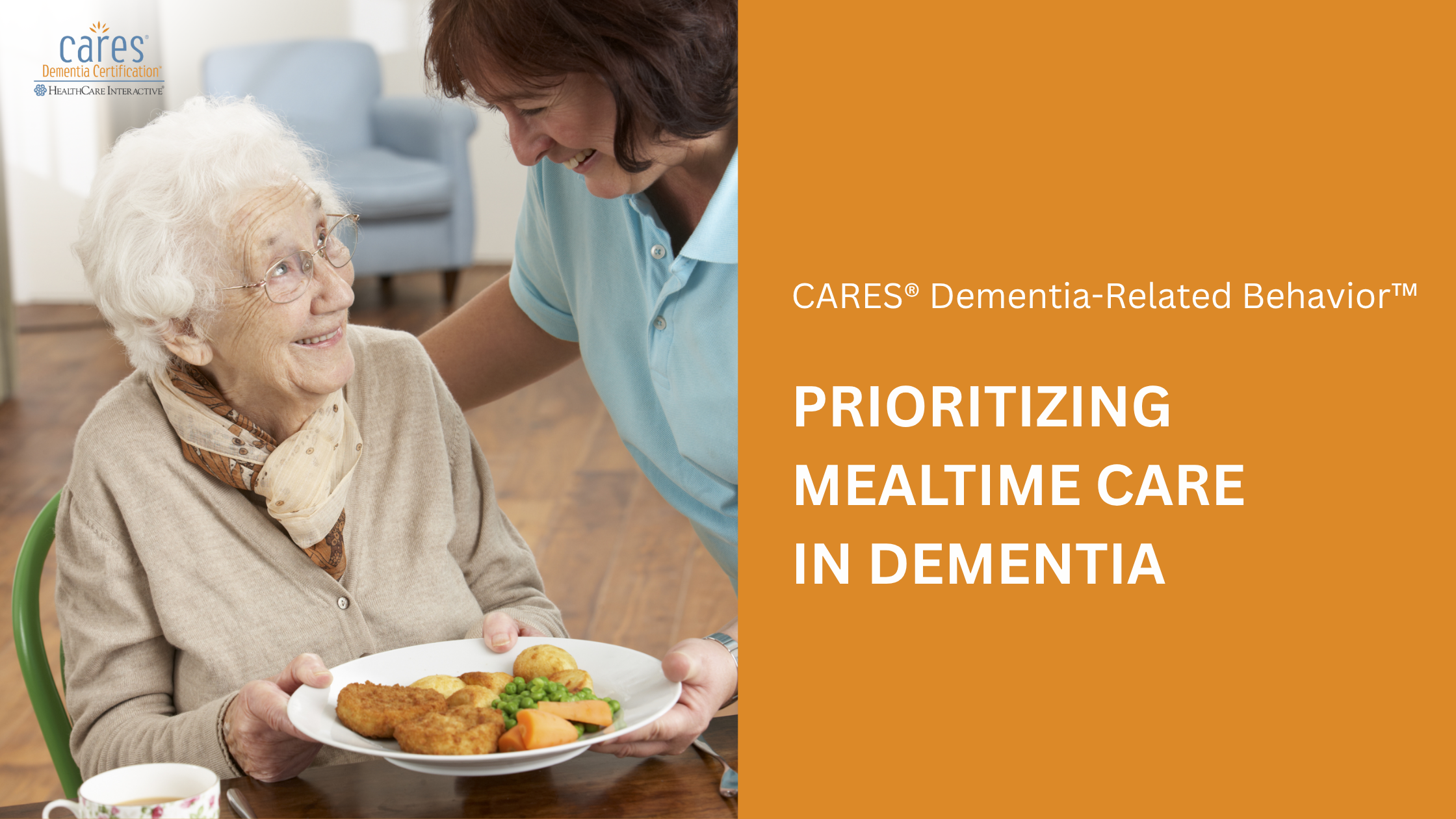
Creating an Effective Dining Experience in Dementia Care

Mealtimes often require caregivers to support several people at once, each with different dietary needs, abilities, and behaviors. Effective dining management in dementia care involves making thoughtful decisions before the meal even begins. A well-planned dining experience can improve safety, reduce distractions, and help every individual enjoy their meal with greater comfort.

Planning the Dining Environment

A well-organized dining room setup for dementia can help reduce distractions and make mealtimes more enjoyable. Seating arrangements should reflect each person’s abilities, behaviors, and level of support required.

Caregivers can improve the dining experience by:

• Seating individuals who become easily distracted before the room becomes busy.
• Helping independent eaters begin their meals early so food stays warm.
• Placing those who need feeding assistance where caregivers can easily provide support.
• Considering special diets, adaptive utensils, and mobility needs when arranging seating.
• Creating a calm environment that encourages focus during meals.

Thoughtful planning helps ensure smooth dementia meal coordination while reducing stress for both caregivers and residents.

Supporting Individual Needs During Mealtimes

Every person has unique routines, preferences, and abilities. Providing meal assistance for seniors with dementia means adapting care to meet those individual needs rather than following the same approach for everyone.

Simple strategies include:

• Encouraging conversation with familiar companions when appropriate.
• Offering gentle reminders and reassurance during meals.
• Allowing enough time for people who eat independently without rushing them.
• Monitoring each person’s comfort, safety, and nutritional intake throughout the meal.

By supporting independent eating whenever possible and providing assistance only when needed, caregivers can help preserve dignity while promoting confidence and enjoyment during mealtimes.

Create more positive dining experiences with CARES® Training. Save 10% with code SummerFun through September 30, 2026.

Prioritizing Mealtime Care in Dementia Care

Providing mealtime care in dementia often means supporting several people at once, each with different abilities, dietary needs, and levels of independence. While one-on-one care is ideal, caregivers frequently need to make quick decisions about who needs help first while ensuring everyone feels safe, respected, and supported.

Prioritize Care Based on Individual Needs

When multiple people require assistance, caregivers should focus on safety and nutrition while considering each person’s unique needs.

Key priorities include:

• Assist individuals who need help eating before those who eat independently.
• Give prompt attention to people on pureed or liquid diets.
• Watch for behaviors such as wandering, impatience, or reaching for others’ food.
• Encourage individuals who can eat independently but may need occasional reminders.
• Monitor everyone throughout the meal for signs of discomfort or difficulty eating.

Use Person-Centered Mealtime Strategies

Effective dementia care prioritization is about more than completing tasks—it involves understanding each person’s preferences, routines, and life story. Familiar conversations or favorite foods can help create a calmer dining experience.

Helpful strategies include:

• Learn each person’s eating habits and preferences.
• Communicate calmly and provide reassurance.
• Encourage independence whenever possible.
• Stay flexible as needs may change during the meal.
• Observe and report changes in eating behaviors to the healthcare team.

By applying person-centered meal assistance and thoughtful dementia caregiving strategies, caregivers can manage multiple residents while promoting comfort, dignity, and positive mealtime experiences.

Improve your dementia care skills with CARES® Training and save 10% using code SummerFun through September 30, 2026.

Building Trust During Clinical Procedures in Dementia Care

People living with dementia often manage other chronic health conditions such as diabetes, high blood pressure, or heart disease. While these conditions require routine clinical procedures, dementia can make these experiences confusing or frightening. Using effective clinical procedures in dementia care helps caregivers reduce anxiety while encouraging cooperation and preserving dignity.

Building Comfort Before Care

Successful care begins by creating a connection before starting any medical task. Instead of immediately performing a procedure, caregivers should first greet the individual warmly and establish trust. A friendly introduction, eye contact, and calm conversation help the person feel safe and understood.

For example, when checking blood glucose levels for someone with diabetes, caregivers should first greet the person, then politely ask them to sit comfortably before explaining what will happen next. Once the individual is relaxed, gently request a finger for testing, clean the area with alcohol, and perform the finger prick. After the sample is taken, provide a cotton ball for comfort before checking the glucose result and administering insulin if required.

Communication Makes Every Step Easier

Clear, step-by-step communication is one of the most effective dementia communication techniques. Explaining each action before it happens helps reduce fear and confusion. Moving slowly, using a reassuring tone, and allowing the person time to respond encourages cooperation and creates a more positive care experience.

Providing person-centered clinical care means focusing on the individual—not just the procedure. By combining patience, compassion, and respectful communication, caregivers can help people living with dementia feel more comfortable during routine medical care while supporting both their physical health and emotional well-being.

Build confidence in providing compassionate dementia care. Enhance your caregiving skills with CARES® Training and enjoy 10% off using code SummerFun through September 30, 2026.

Recognizing Signs of Eating Difficulties in Dementia Care

As dementia progresses, eating may become more difficult due to changes in memory, coordination, and swallowing. Identifying dementia eating difficulties early helps caregivers respond quickly, reduce health risks, and ensure the person receives the appropriate care and support.

Signs That Should Never Be Ignored

Caregivers should watch for changes during meals and report them to the healthcare team. Important signs include:

• Trouble using a fork or spoon
• Difficulty staying focused while eating
• Spitting out favourite foods
• Pain when eating
• Eating less than half of a meal
• Trouble chewing
• Swallowing problems in dementia
• Drooling or food leaking from the mouth
• Coughing before, during, or after swallowing
• Choking while eating or drinking
• Increased congestion or a runny nose after meals
• A wet, hoarse, or gurgling voice after eating
• Holding food in the mouth or throat
• Refusing to open the mouth or accept food
These symptoms may indicate changing needs that require professional assessment and timely intervention.

Early Action Supports Better Outcomes

Monitoring nutrition in dementia is an essential part of quality care. Reporting changes promptly allows healthcare professionals to adjust care plans and improve mealtime safety for seniors. Careful observation, clear communication, and compassionate support help caregivers protect health while preserving dignity and comfort.

Learn practical strategies to recognize changing mealtime needs with confidence. Build your caregiving skills with CARES® Training and enjoy 10% off using code SummerFun through September 30, 2026.