

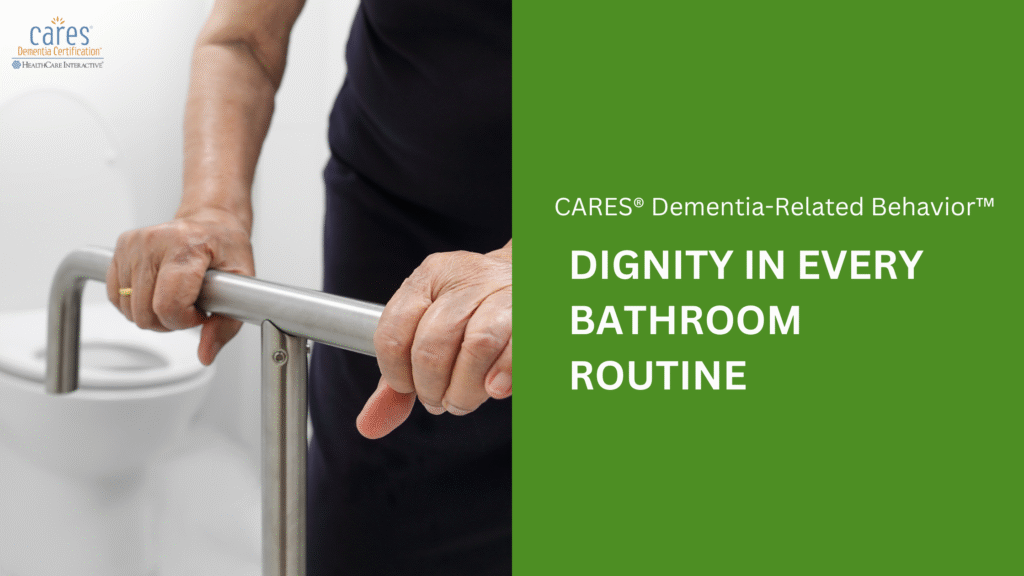
Going to the bathroom is a private and familiar part of everyday life. When dementia affects a person’s ability to use the toilet independently, this routine can become confusing, stressful, and emotionally difficult. Providing respectful toileting support for people with dementia can help maintain comfort, dignity, and a sense of independence.
Why Independence Matters
Whenever possible, caregivers should encourage individuals to participate in their own bathroom routines. Maintaining independence can help preserve dignity, confidence, and familiar daily habits. It can also reduce frustration by allowing the person to remain involved in a task they have managed privately for most of their life.
Understanding the person’s individual routine is an important part of person-centered dementia care. Caregivers can learn bathroom patterns by:
• Observing when the person typically uses the bathroom.
• Keeping track of regular toileting times and habits.
• Noticing changes in the person’s routine or behavior.
Recognizing Signs and Providing Support
A person with dementia may not always say that they need to use the toilet. Caregivers should watch for changes such as restlessness, wandering, pulling at clothing, or repeatedly asking about the bathroom. Recognizing these toileting cues in dementia can allow caregivers to offer assistance before an accident occurs.
The CARES® Approach encourages caregivers to communicate calmly, explain what they are doing, and respect personal privacy. Use appropriate terminology such as disposable briefs rather than terms that may feel childish or disrespectful.
With patience, observation, and compassion, caregivers can make bathroom assistance more comfortable while protecting the person’s dignity and promoting independence.
Build your confidence in person-centered dementia care with CARES® Training. Save 10% with code SummerFun through September 30, 2026.