

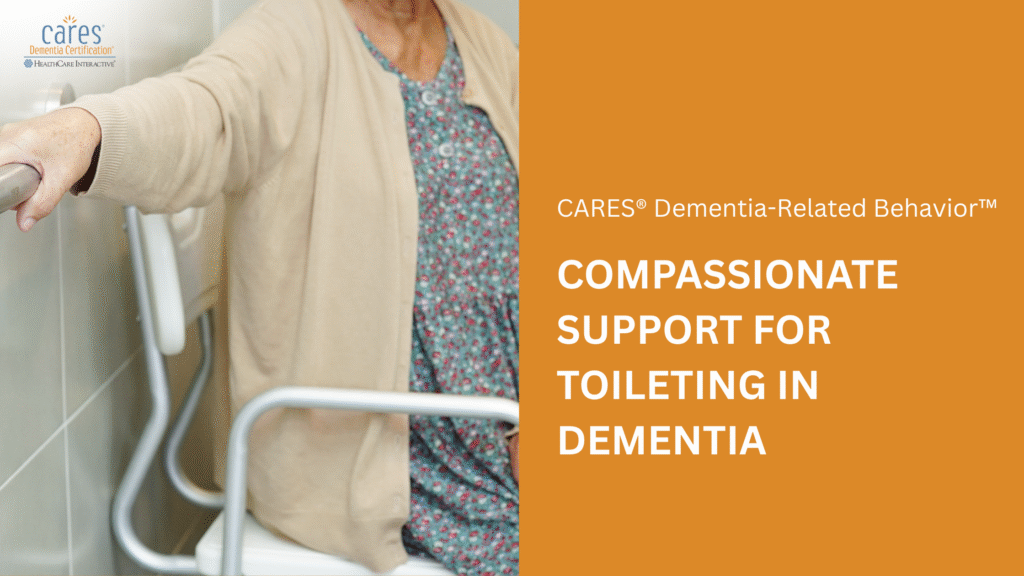
For a person living with dementia, needing help with toileting can be an emotional and difficult change. What was once a private, independent routine may gradually require caregiver assistance. Using a calm, respectful approach can make this experience more comfortable while helping preserve the person’s dignity.
Why Toileting Support Matters
Helping a person continue using the toilet for as long as possible offers important physical and emotional benefits. It can:
• Preserve dignity and independence by supporting familiar routines.
• Protect skin health by reducing prolonged exposure to moisture.
• Improve comfort by allowing the person to sit upright while using the toilet.
• Support bladder and bowel emptying in a comfortable position.
• Reduce cleanup and clothing or bedding changes when accidents occur.
• Respect family preferences regarding personal care.
Using the CARES® Approach
The way caregivers communicate during toileting can make a significant difference. A person with dementia may feel embarrassed, confused, or frightened when receiving assistance with such personal care.
Caregivers can help by remaining patient, speaking calmly, explaining what they are doing, and allowing the person to participate whenever possible. Maintaining privacy and treating the individual with respect throughout the process can also help build trust.
The CARES® Approach encourages caregivers to look beyond the task and focus on the person behind the care need. With compassion, patience, and individualized support, people living with dementia can continue to participate in bathroom routines at different stages of the disease.
Promote dignity, comfort, and compassionate care with CARES® Training. Save 10% with code SummerFun through September 30, 2026.