More Than a Meal: The CARES® Approach to Mealtimes

When caring for someone with dementia, mealtimes can often feel like a challenge. But with the CARES® Approach, we are reminded that eating and drinking “well” isn’t just about nutrition. Mealtime is far more than a routine—it’s a meaningful experience, a moment of connection, and often the highlight of the day for many people.

For individuals living with dementia, especially in the later stages, engaging during mealtimes becomes not only important but essential. Here’s why—and how—you can make those moments truly count.

Why Engagement at Mealtime Matters

We often forget that food brings people together. It’s not just about what’s on the plate—it’s about the environment, the company, and the comfort that mealtimes offer. For those with dementia, these moments help preserve dignity, encourage interaction, and even stimulate positive memories.

When caregivers create a thoughtful, engaging mealtime environment, it can:

• Reduce agitation and confusion

• Encourage better appetite and hydration

• Promote a sense of normalcy and belonging

• Foster emotional connections

Simple Ways to Create a Meaningful Mealtime Environment

Here are some practical and compassionate ways to enhance the mealtime experience for someone with dementia:

1. Sit Besides, Not stand over

Instead of standing over the person while feeding them, sit down and stay at their eye level. This small change can shift the experience from clinical to caring. Standing over someone can feel impersonal or even demeaning, while sitting shows presence, respect, and attentiveness.

2. Make It a Conversation, Not a Task

Don’t just serve the food—talk about it. Describe the textures, aromas, or flavors. Ask what they liked eating in the past. Even if verbal responses are limited, your tone and smile offer reassurance and warmth. Mealtimes are opportunities to connect, not just complete a task.

3. Curate the Environment

Consider placing the person with others they are comfortable around—perhaps friends, family, or familiar caregivers. If that’s not possible, gentle background music can create a calming and pleasant atmosphere. These sensory touches can turn an ordinary moment into something memorable.

4. Focus Your Attention

If you’re helping someone eat, focus on them. Avoid talking over or around them with others in the room. A divided conversation may make the person feel excluded or overlooked. Even a quiet meal can feel meaningful when you’re fully present with them.

Every mealtime is a chance to nourish not just the body, but also the heart and soul. Using the CARES® Approach—focused on Connection, Attention, Respect, Engagement, and Support—can help transform meals into comforting and enriching experiences for people with dementia.
Remember, it’s not just about food—it’s about how we share it.

Make mealtimes more meaningful. Learn how to connect, engage, and care with confidence using the CARES® Approach. Get 10% OFF any training or certification program with code BeautifulAugust at checkout. Offer valid through Aug 31, 2025.

Share With Others (Mealtime Edition)- The fifth step in CARES® Approach

This is the final step in the CARES® Approach—and one that truly shapes the mealtime experience. Sharing with others about what happens during meals is essential in dementia care. It helps everyone involved in caregiving stay aligned, leading to more thoughtful, consistent support at the table.

Whether it’s a new food the person enjoyed, a calm way that helped reduce resistance, or a small sign of discomfort—sharing these observations helps the person with dementia feel better understood and cared for. It also builds stronger communication and trust among the care team and family.

When sharing your mealtime experience, keep these points in mind:

1. Clearly describe what the person ate, how they reacted, and what strategies you used.

2. Note what made things easier—or harder—during the meal.

3. Include specific details that might help others continue what works.

4. Don’t overlook the small things—they often make a big difference.

5. Always share with compassion and respect.

Remember: sharing isn’t just about reporting what happened. It’s about creating a supportive circle around the person—where everyone contributes to making mealtimes calm, dignified, and nourishing.

If mealtimes feel overwhelming while caring for someone with dementia, the CARES® Approach offers practical guidance—like the importance of sharing with others to create a supportive care environment. To help you get started, enjoy 10% OFF any training or certification program with code BeautifulAugust. Offer valid through Aug 31, 2025.
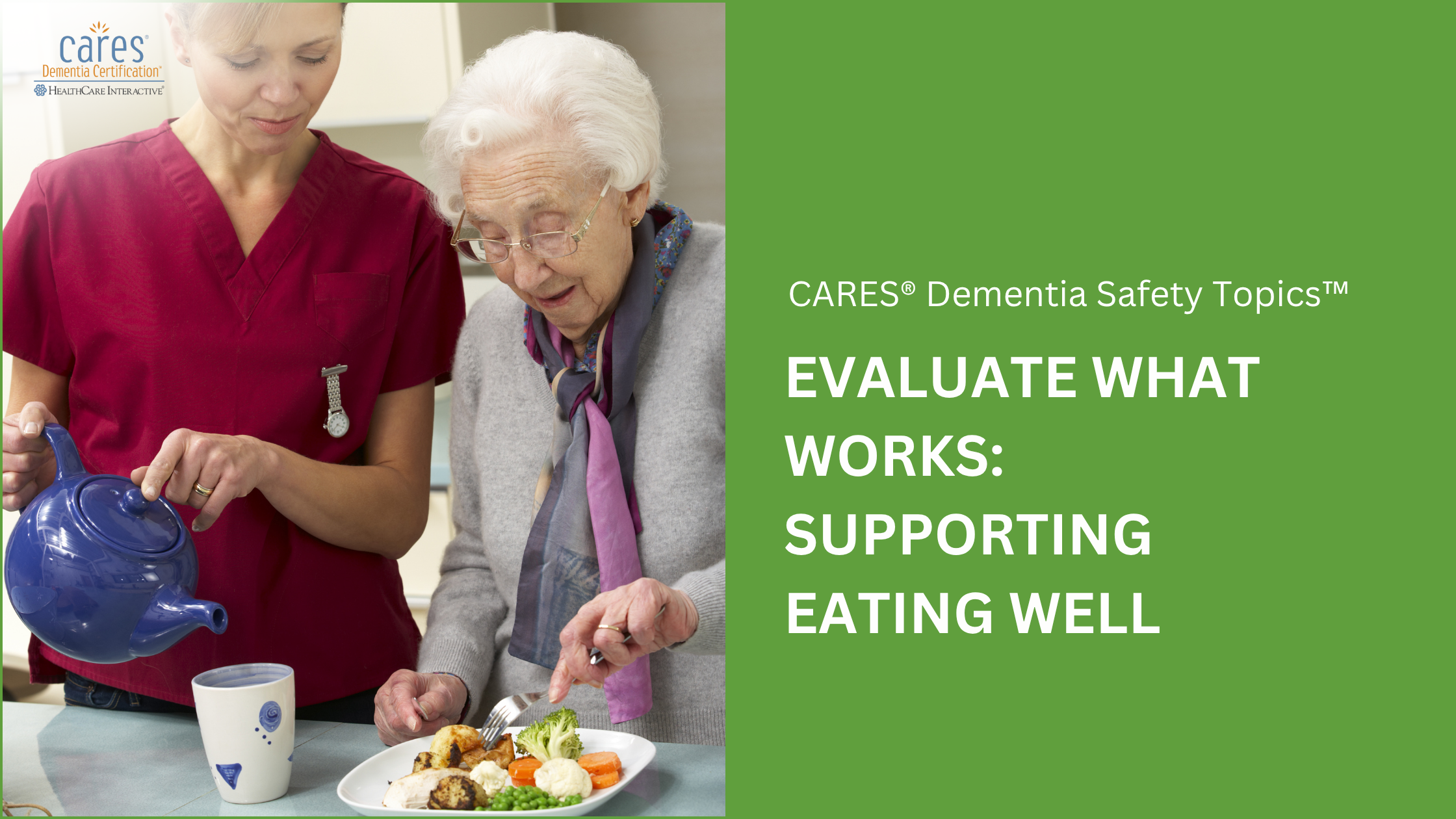
Evaluate What Works During mealtime: The fourth step in CARES® Approach

In dementia care, it’s not just about offering support—it’s about offering the right support. That’s why the fourth step in the CARES® Approach, “E – Evaluate What Works,” is so important. After you’ve connected, assessed, and responded, the next key step is to pause and reflect: Is this working well for the person in my care?

When it comes to eating well, evaluating what works becomes even more essential. People living with dementia may face challenges with appetite, food preferences, chewing, or swallowing. Caregivers need to be observant and flexible to ensure mealtimes are not only safe, but also enjoyable.

Learning Through Example: Barb and Ann

This is a very informative interaction between Barb, a nurse, and Ann, a woman with dementia. Their mealtime routine offers a powerful lesson in how thoughtful caregiving can encourage better food intake and emotional comfort.

Here are some key takeaways from Barb’s approach:

• She prepares Ann for what’s next
Before offering each bite, Barb lets Ann know what she is about to do. This simple explanation helps Ann feel more in control and less startled by unexpected actions.

• She observes and adjusts
Barb carefully watches Ann’s reactions and constantly checks in— “How is that bite?” This helps her identify what Ann enjoys and when to slow down or pause.

• She stays calm and patient
Barb’s calm demeanor creates a relaxed environment, which helps ease Ann’s anxiety and makes eating a more comfortable experience.

• She knows Ann’s best time for meals
Understanding that breakfast is typically the best meal of the day for Ann, Barb puts extra effort into making that experience a success—both nutritionally and emotionally.

• She respects Ann’s preferences
Barb doesn’t push foods Ann dislikes. If something doesn’t go over well, she doesn’t offer it again. This builds trust and makes mealtime a more positive experience.

• She creates a calm eating environment
Keeping distractions, noise, and clutter away helps Ann focus on her food and feel safe—an important factor in dementia-friendly dining.

Why This Matters

Mealtime is more than just eating. For someone with dementia, it’s a deeply sensory and emotional experience. By evaluating what works—like Barb does—you create a supportive space where the person feels heard, respected, and nourished.

It’s not just about the food. It’s about how it’s offered, when it’s offered, and where it’s offered. All these things matter.

Your Role as a Caregiver

As a caregiver, your job is part observation, part intuition, and part adjustment. What worked yesterday may not work today—and that’s okay. The key is to stay engaged and responsive.

Ask yourself:

• Is the person enjoying the food?
• Are they showing signs of stress or calm?
• Should I try a different environment or time of day?
Sometimes the smallest change—a softer voice, a quieter room, a better time—can make the biggest difference.

If mealtimes feel challenging when caring for someone with dementia, the CARES® Approach can help guide you. We’re here to support you on this journey—enjoy 10% OFF any training and certification program with code SunnyJuly at checkout. Offer valid through July 31, 2025.

Respond Appropriately During Mealtime: The third step in CARES® Approach

When caring for someone with dementia, helping them eat well is more than just offering food—it’s about understanding behavior around food, their needs and responding in ways that make them feel safe, respected, and comfortable. The CARES® Approach provides a helpful framework for dementia care, and the third step—Respond Appropriately—is especially important during mealtimes.

Understanding Behavior Around Food

People with dementia may refuse to eat, get distracted, become frustrated, or have difficulty using utensils. These behaviors aren’t random—they often reflect underlying needs or discomfort. Responding appropriately requires recognizing these signs and adjusting your approach based on what you know about the person.

Use What You Know About Them

Each person has unique food preferences, habits, and routines developed over a lifetime. Use this knowledge to make meals more familiar and enjoyable:

• Favorite Foods: Serve dishes they’ve always loved.
• Cultural Preferences: Respect traditions or dietary restrictions.
• Mealtime Routines: Stick to familiar times and settings for meals.

For example, if someone always ate lunch at noon with soft music playing, recreating that experience may help them feel more at ease and willing to eat.

Respond with Calm and Care

A person may become upset or confused during mealtime. If they push food away or say they’ve already eaten, avoid correcting them. Instead, gently encourage or offer an alternative. How you respond can reduce anxiety and encourage better eating habits.

Be Flexible and Patient

Eating might take longer. They may need visual cues, hand-over-hand guidance, or even finger foods. Be prepared to adapt as their needs change, always with a focus on dignity and comfort.

Create a Positive Environment

Minimize distractions, offer foods with appealing colors and smells, and sit at eye level while offering support. A calm and inviting atmosphere can make a big difference.

Helping someone with dementia eat well begins with understanding and support—and we’re here to help you every step of the way. To make that journey a little easier, enjoy 10% OFF any training and certification program with code SunnyJuly at checkout. Offer valid through July 31, 2025.

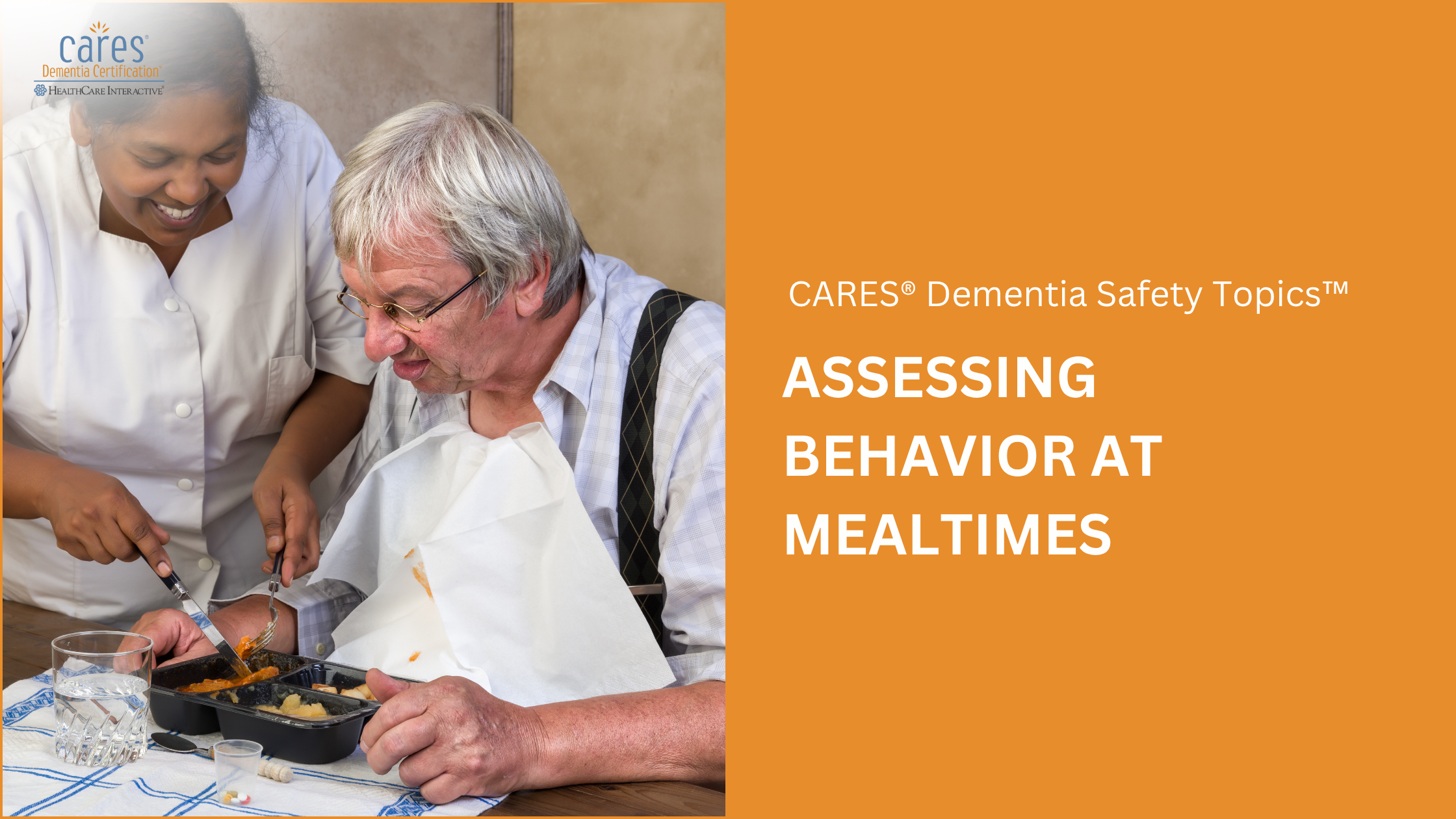
Assessing Behavior at Mealtimes: The Second Step in the CARES® Approach

Mealtimes can be a source of comfort and connection—but for people living with dementia, they can also become moments of confusion or distress. That’s why the CARES® Approach includes a crucial second step: Assess Behavior. Understanding the “why” behind a person’s actions during meals can help caregivers create a more positive, calm, and nourishing experience.

Why Assessing Behavior Matters

Behavior is a form of communication, especially for someone with dementia who may struggle to express their needs with words. If a person refuses to eat, leaves the table repeatedly, or takes food from others, these behaviors aren’t random—they’re signals. The key is to assess what the person might be trying to communicate through their actions.

Observing and Identifying Patterns

Start by observing what’s happening during meals. Ask yourself questions such as:

• When does the behavior occur? Is it only at lunch or dinner?
• Where is it happening? At the dining table, in a group setting, or somewhere more private?
• Who is present? Does the person behave differently depending on who else is at the table?

By noticing these patterns, you may uncover important clues. For example, if someone leaves the table when it’s noisy, they may be overwhelmed by the environment. If they take food from others, they may be confused about which plate is theirs.

Assessing behavior is not about judgment—it’s about curiosity and compassion. It’s about taking the time to truly see the person behind the behavior and meeting their needs with patience and understanding. When we look beyond the surface, we often find simple, meaningful ways to improve the dining experience for people living with dementia.

Supporting someone with dementia begins with understanding and compassionate care. To help you on that journey, we’re offering 10% OFF any training and certification program with code SunnyJuly at checkout—valid through July 31, 2025.

Connect with the Person During mealtime – The First Step in CARES® Approach

For people living with dementia, mealtime should be more than just nourishment—it should be an opportunity to connect, engage, and feel comforted. The CARES® Approach offers a practical, person-centered method to make this possible. It begins with the first step: C – Connect with the Person.
Getting to know the person—who they are, where they come from, and what brings them joy—can greatly improve their mealtime experience.

Connecting Through Personal History

Understanding the personal background of someone living with dementia offers valuable insight into how best to connect with them and support their needs. Here are a few examples of how this knowledge can help guide meaningful interactions during mealtime.

1. Someone who grew up in a large family may associate mealtimes with lively conversations and shared experiences. Seating them with others who enjoy chatting during meals can help recreate that familiar and comforting atmosphere.

2. If the person has a background in working at a family restaurant, talking about those responsibilities—such as cooking, serving, or cleaning—can spark memories and engagement.

3. When encouraging fluids, find ways to link drinks to their interests. For instance, if they enjoy sports, raise a toast related to their favourite team to make the moment more meaningful.

4. If the individual enjoys outdoor activities like gardening or yard work, choose a seat near a window, enjoy a snack together, and talk about the flowers, trees, or weather outside. These natural connections can promote calmness and conversation.

Connecting with a person living with dementia means seeing beyond their condition and recognizing the unique life they’ve lived. By understanding their personal history, interests, and routines, caregivers can create mealtime experiences that feel familiar, comforting, and respectful. The first step in the CARES® Approach—Connect with the Person—reminds us that meaningful care begins with meaningful connection. Even small gestures rooted in personal knowledge can lead to greater trust, improved participation, and a deeper sense of dignity at every meal.

Helping someone with dementia starts with understanding and support. To make that journey easier, get 10% OFF any training and certification program with promo code SunnyJuly at checkout. Offer valid through July 31, 2025.

Recognizing the Warning Signs of a Swallowing Problem in Alzheimer’s Disease

Swallowing is a function we often take for granted. Yet, for individuals living with Alzheimer’s disease, this seemingly simple task can become increasingly difficult as the condition progresses. Difficulty swallowing, known as dysphagia, is a common and serious complication in the later stages of dementia. Left unaddressed, it can lead to malnutrition, dehydration, aspiration pneumonia, and a decline in overall health.
As a caregiver, recognizing the early warning signs of a swallowing problem is essential to ensure safety, comfort, and appropriate medical intervention for your loved one or those under your care.

Why Swallowing Becomes Difficult in Alzheimer’s Disease

Alzheimer’s affects more than just memory—it impairs coordination, muscle function, and the brain’s ability to control the complex process of swallowing. As the disease advances, individuals may forget how to chew or swallow or become unable to recognize the food in front of them.

Key Warning Signs of Swallowing Difficulties

If you’re caring for someone with Alzheimer’s, be alert to these common signs of a swallowing problem.

• Complaints of pain or difficulty when swallowing
The person may verbally express discomfort or seem distressed when trying to eat or drink.

• Leaking food or saliva from the mouth
This may indicate a loss of muscle control in the lips or jaw.

• Coughing before, during, or after meals
This could mean food or liquid is entering the airway instead of the esophagus.

• Choking while eating or drinking
A serious sign that requires immediate attention to prevent aspiration.

• Increased congestion or runny nose after meals
This could be a subtle sign of aspiration or food entering the nasal passages.

• Change in voice quality
A wet, gurgling, or hoarse voice after eating or drinking may indicate that food or liquid has entered the airway.

• Food retention in the mouth or throat
Watch for food lingering in the cheeks or not being swallowed properly.

• Resistance to being fed or eating
This may stem from fear of choking or discomfort while swallowing.

• Refusal to open the mouth
A sign of discomfort, confusion, or loss of interest in eating.

• Unexplained weight loss
Often a late sign, weight loss may result from inadequate nutrition due to swallowing issues.

Notify a supervisor or physician if any of the above symptoms are observed.

Maintaining Dignity During Mealtimes

Beyond recognizing the physical signs, it’s just as important to maintain a person’s dignity while eating. For those who struggle to keep food in their mouths, be mindful of how you assist them.
Avoid scraping the spoon across their lips or the area around their mouth. This can be both painful and embarrassing. Instead, gently use a napkin to wipe their mouth. Even better, if the person is able, ask them to wipe their own mouth when needed. This simple act respects their autonomy and self-esteem.

Helping someone with dementia starts with understanding and support. To make that journey easier, get 10% OFF any training and certification program with promo code SunnyJuly at checkout. Offer valid through July 31, 2025.

Eating Abilities at Various Stages of Alzheimer’s Disease

Eating is a deeply personal and social activity, often tied to comfort, identity, and daily routine. For individuals living with Alzheimer’s disease, the ability to eat independently changes with each stage of the condition. Understanding how eating behaviors and needs evolve is crucial for caregivers and loved ones to provide appropriate support and maintain quality of life.

1. Normal Thinking (No Dementia)

In this stage, the individual does not have Alzheimer’s disease or any other form of dementia. Their cognitive functions are intact, and eating habits remain typical. No special intervention is needed, unless there are other health-related dietary needs.

Note: The term “normal thinking” refers only to the absence of dementia and not to a person’s value or capabilities. Those living with dementia are still very much whole individuals deserving of dignity and respect.

2. Early Stage of Alzheimer’s Disease

In the early stages, there is minimal impact on a person’s ability to eat or prepare food. Individuals can often:

• Feed themselves without difficulty.
• Prepare simple meals independently.
• Continue enjoying meals with minimal, if any, assistance.

Caregivers can support by:

• Offering occasional reminders or assistance only when needed.
• Respecting the individual’s autonomy and abilities.

3. Middle Stage of Alzheimer’s Disease

This stage brings more noticeable cognitive and functional challenges that begin to affect eating behaviors.

Common difficulties include:

• Inability to focus on meal preparation, often leaving meals unfinished.
• Skipping meals due to forgetfulness or lack of hunger awareness.
• Disrupted meal patterns because of time confusion or lack of routine.

Tips for caregivers:

• Set consistent mealtimes and provide gentle reminders.
• Offer meals in a quiet, distraction-free setting.
• Prepare simple, easy-to-eat meals that require little effort to serve and eat.

4. Late Stage of Alzheimer’s Disease

In the final stage, eating abilities decline significantly. The person may require full assistance and close monitoring during meals.

Common challenges:

• Loss of appetite and inconsistent willingness to eat.
• Difficulty using utensils—may need hand-over-hand guidance.
• Struggles with portion control, often trying to eat too much or too little at once.
• Strong preference for sweet foods.
• Frequent need for verbal and visual prompts to continue eating.
• Physical difficulties, such as trouble sitting up or maintaining posture during meals.
• Forgetfulness of basic actions, such as chewing or swallowing.

End-of-Life Considerations:

• Difficulty holding the head up may affect feeding.
• Straws or special cups may make drinking easier if the person can still sip.
• The primary goal becomes comfort care—offering small amounts of food or fluids only if they bring comfort or pleasure.
• Maintain oral hygiene by keeping the mouth clean and lips moist.

Care Tip: Keep the Tabletop Uncluttered

Especially during the late stage, it’s essential to reduce visual and sensory distractions at mealtime. Remove:

• Flowers
• Decorative items
• Sugar packets
• Any non-edible clutter
An uncluttered table helps the person focus on eating and minimizes confusion or distress.

Helping someone with dementia starts with understanding and support. To make that journey easier, get 10% OFF any training and certification program with promo code SunnyJuly at checkout. Offer valid through July 31, 2025.

Routines, Habits, and Challenges: Supporting Mealtimes for People with Dementia

When caring for someone with dementia, understanding their personal habits—especially around food—can make mealtimes much smoother and more meaningful. Every person has their own routines and preferences, and honoring those familiar patterns helps create comfort and connection.

Why Routines and Habits Matter

To truly support someone at mealtime, it’s helpful to know a bit about their past food habits.

• Did they enjoy a big breakfast each day?
• Were they someone who liked to eat in peace, or did they enjoy meals with others?
• Did they love a certain snack—maybe a piece of fruit, cookies, or a cup of tea in the afternoon?
These small details can help you plan meals in a way that feels familiar and comforting. Sticking to long-standing routines can reduce stress and make the person feel more at ease.

Things That Can Affect Eating

Even with the best intentions, some challenges might get in the way of eating well. Here are a few common reasons why someone with dementia might struggle during meals:

• Difficulty swallowing – A common issue as dementia progresses. Always observe closely and speak with a healthcare provider if you notice choking or coughing while eating.
• Mouth pain – Dental issues or sore gums may make eating uncomfortable.
• Distractions – A noisy or busy environment can overwhelm or confuse the person, making it harder to focus on eating.
• Too many choices – Multiple food options can be confusing. Offering just one or two choices at a time is often more helpful.
• Needing constant assistance – If they can’t feed themselves easily, they may feel frustrated or discouraged.

Kindness and Patience Go a Long Way

By learning and respecting routines—and understanding what might make eating difficult—you can help turn mealtime into a more positive and comforting experience. A quiet environment, familiar foods, and your calm, patient presence can make all the difference.
Stay focused and present with your loved one, offering gentle reminders when needed. These small, thoughtful actions can bring ease, dignity, and connection to each meal you share.

Helping someone with dementia starts with understanding and support. To make that journey easier, get $25 OFF with code 2MYVB5 at checkout. Offer valid through June 30, 2025.

Helping Loved Ones with Dementia at Mealtimes

Mealtime is more than just eating—it’s a time to connect, feel comfort, and stay independent. For people living with dementia, eating can sometimes become a challenge. That’s why it’s important to help them keep their abilities for as long as possible.

Some people with dementia can still feed themselves but may need a little reminder. A gentle cue like, “Take a sip of your juice,” can go a long way. Others may need more help—like having their food unwrapped or being handed their spoon or fork.

What matters most is giving just the right amount of help—not too much, not too little. When we step in and do everything for them, even with good intentions, they may lose skills faster. But when we let them do what they can, we help them stay stronger and more confident.
So, at mealtimes, take your time. Offer help when needed, but also give them space to do things on their own. It’s a small act of care that makes a big difference.

Caring Goes Beyond the Plate

While we’re supporting their independence at the table, we also need to think about what they’re eating and drinking. That brings us to another important part of mealtime care—nutrition.

Don’t Forget Nutrition

Mealtimes are also a great chance to check on their overall health. Making sure your loved one is eating the right kinds of food and drinking enough fluids is very important. As dementia progresses, people may forget to eat or drink, or lose interest in food altogether. Poor nutrition can lead to weight loss, infections, slow healing, and more.

Try to keep meals enjoyable and relaxed. Offer favourite foods when possible, and encourage small sips of water or juice throughout the day. It’s not just about feeding the body—it’s about caring for the whole person.

Helping someone with dementia starts with understanding and support. To make that journey easier, get $25 OFF with code 2MYVB5 at checkout. Offer valid through June 30, 2025.