


Encouraging Safe Wandering with the 5-Step CARES® Approach

Wandering is a common behavior among people living with dementia. While it can sometimes cause safety concerns, wandering also has positive aspects—it can help individuals stay active, reduce restlessness, and promote independence. The key is to support wandering in a safe and meaningful way.

That’s where the CARES® Approach comes in. CARES is a simple, person-centered framework that helps caregivers connect with individuals, understand their behaviors, and respond in ways that promote dignity, safety, and well-being.

Here’s how it works:

C – Connect with the Person

The first step in the CARES® Approach is to connect with the person. Taking time to build trust and establish a human connection helps encourage safe wandering and reduces feelings of confusion or distress.

A – Assess Behavior

Next, carefully assess behavior. Observe the person with dementia closely—when, where, and how often are they wandering? Are there specific triggers, such as time of day, routine changes, or environmental cues? Recognizing patterns helps you understand their needs and intentions, making it easier to guide them safely.

R – Respond Appropriately

The third step is to respond appropriately. Use what you know about the individual, combined with your observations, to address their needs in a supportive and respectful way. Your response should reduce risk while honoring their independence and dignity.

E – Evaluate What Works for Safe Wandering

The fourth step is to evaluate what works. Pay attention to which approaches are effective in supporting safe wandering and which are not. Continuous reflection helps improve care and ensures strategies remain person-centered.

S – Share with Others

Finally, share with others. Communicate your observations, successful strategies, and challenges with colleagues, family members, and the care team. Sharing ensures consistency, strengthens teamwork, and provides the best support for the person with dementia.

Conclusion

Wandering doesn’t always need to be prevented—it can often be supported in ways that bring comfort, activity, and purpose to people with dementia. By using the CARES® Approach, caregivers can create safe environments, reduce risks, and help individuals live with dignity and independence.
Safe wandering isn’t just about managing behavior—it’s about seeing the whole person, honoring their needs, and walking alongside them with compassion.

Get 10% off on CARES® training and learn step-by-step strategies to support safe wandering using the CARES® Approach. Use code Halloween10 by November 15, 2025.
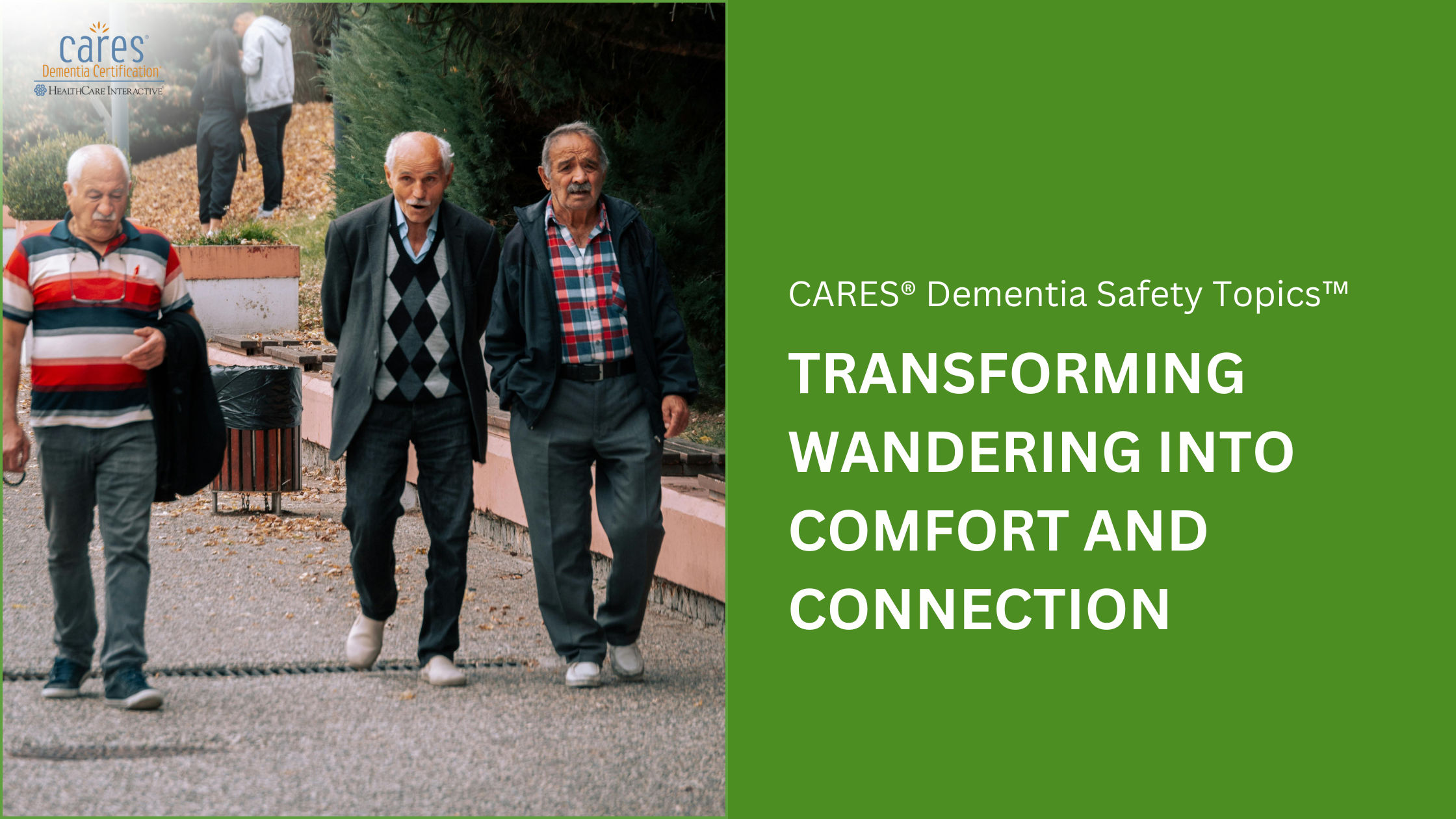
Safe Pathways, Calm Minds: Helping People Wander Well

Wandering is a natural behavior for many people living with dementia. While it can sometimes lead to unsafe situations, it can also be turned into a positive and meaningful activity with the right environment. By shaping spaces thoughtfully and offering calming outlets, caregivers can encourage “positive wandering” while discouraging unsafe or “negative wandering.”

Here are some simple ways to support safe and beneficial exploration:

1. Make Exit Doors Less Noticeable

Painting exit doors to blend into the environment—for example, with an outdoor scene—can help prevent unsafe wandering to restricted areas. This reduces risk while keeping people at ease.

2. Create Clear Pathways

Clutter-free indoor and outdoor walkways give people safe routes to explore. These paths encourage natural movement without the worry of tripping hazards or confusion.

3. Provide Resting Spaces

Placing comfortable chairs and benches along walking routes allows people to rest when they get tired. Having safe places to pause encourages longer, more relaxed wandering.

4. Offer Recreational Zones

Small nooks filled with old-fashioned objects, puzzles, or familiar keepsakes can provide enjoyable distractions. These cozy exploration spots turn wandering into a meaningful activity rather than a risky one.

5. Use Soothing Sounds

Playing soft music or nature sounds can help calm people who feel restless or anxious while wandering. A peaceful soundscape makes the environment feel safe and welcoming.

6. Introduce Gentle Activities

Structured physical activities like chair exercises or simple movement routines give people a healthy outlet for energy. Rocking chairs or glider seats are another safe, calming option for those who walk frequently.

7. Add Visual Cues

People with dementia can become confused about where they are. Personal cues—such as their name in large print, a family photo, or a favorite object near their door—can help them recognize their own space and feel secure.

8. Provide Simple, Hands-On Tasks

Activities like folding laundry or sorting objects can give a sense of purpose and comfort. These simple tasks keep hands busy and minds engaged, reducing restless wandering.

Positive Wandering- Final Thoughts

Positive wandering is not just about keeping people safe—it’s about giving them freedom, purpose, and dignity. By making small changes to the environment and offering thoughtful activities, caregivers can transform wandering from a risk into a beneficial part of daily life.

Get 10% off on CARES® training and discover practical ways to encourage safe, positive wandering while reducing risks in dementia care. Use code Halloween10 by November 15, 2025.