

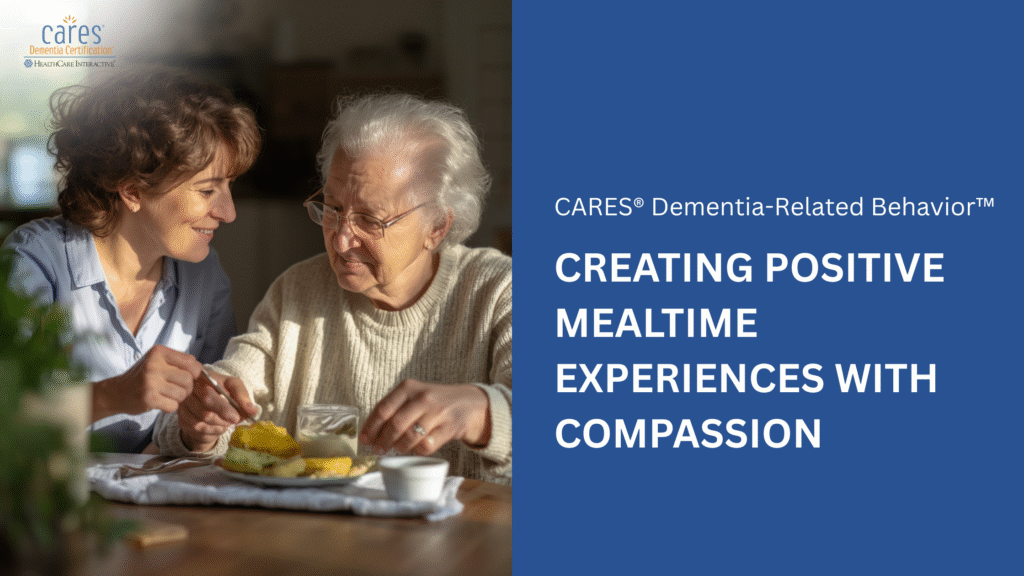
Meals are about more than meeting nutritional needs—they provide comfort, familiarity, and opportunities for connection. For many people living with dementia, eating remains one of life’s most meaningful daily experiences. As dementia progresses, however, changes in memory, coordination, chewing, and swallowing can make mealtimes more challenging. Understanding these changes helps caregivers provide thoughtful support while preserving dignity and independence.
Supporting Safe and Enjoyable Mealtimes
Helping people with dementia eat requires patience, observation, and flexibility. The CARES® Approach for eating encourages caregivers to focus on the individual rather than the task. Offering familiar foods, creating a calm dining environment, allowing enough time for meals, and encouraging independence whenever possible can improve the overall mealtime experience. Caregivers should also pay close attention to changes in eating habits, as poor nutrition and dehydration may worsen dementia symptoms and affect overall health.
Adapting Care as Dementia Progresses
As dementia advances, chewing and swallowing may become less automatic, increasing the need for personalized dementia eating support. Recognizing these changes early allows caregivers to adjust their approach and involve healthcare professionals when needed. Providing person-centered mealtime care means respecting individual food preferences, adapting assistance to changing abilities, and making every meal a positive experience. By combining compassion with practical dementia nutrition tips, caregivers can help individuals continue to enjoy food safely while supporting their health, comfort, and quality of life.
Help make every mealtime safer, more comfortable, and more enjoyable. Build your caregiving confidence with CARES® Training and enjoy 10% off using code SummerFun through August 31, 2026.