

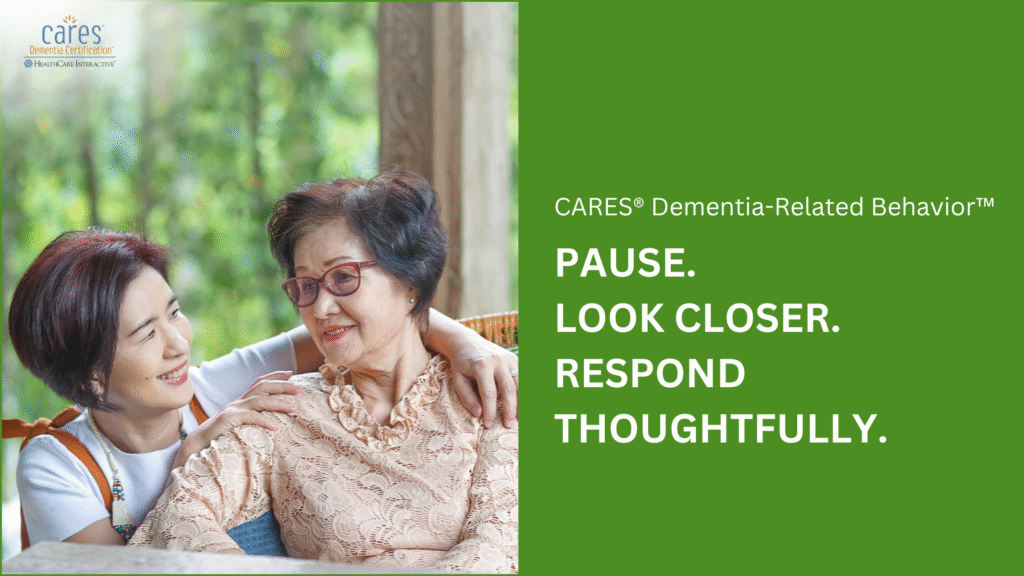
In dementia care, the words we use matter. That’s why it’s important to move away from blaming language like “challenging,” “difficult,” or “disruptive.” While certain actions may feel difficult for those of us without dementia, people living with dementia are always more than their behavior. Understanding behavior changes in dementia starts with recognizing the person behind those actions.
Understanding Behavior as Communication
If someone in your care responds in ways that seem unusual or confusing, it helps to pause and ask a deeper question. Often, behavior changes in dementia are a form of communication. The behavior may be expressing fear, discomfort, confusion, or an unmet need. Rather than ignoring, scolding, or immediately medicating, taking time to understand the message can lead to more supportive care.
This approach also helps clarify what is dementia-related behavior—actions influenced by changes in the brain, not intentional choices made to cause disruption.
Choosing Non-Blaming Language
Using non-blaming language in dementia care shifts how we think and how we respond. When the focus stays on the disease rather than the person, care becomes more compassionate and less reactive. Language that removes blame opens the door to curiosity, patience, and understanding.
A CARES® Tip: Pause and Reflect
When you notice behavior changes in dementia that feel bothersome, ask yourself:
• Is anyone being harmed?
• Is this a problem for others, or just uncomfortable for me?
If no one is upset or at risk, it may be okay to let the behavior continue. Sometimes, “rolling with it” reduces stress for everyone involved.
How Common Are These Changes?
Behavior changes in dementia are very common, both in care settings and at home. Research shows that 70% to 90% of nursing home residents with dementia experience behaviors often described as resistive, threatening, or disruptive. Studies also show that more than 80% of people living with dementia experience some form of behavior change at some point.
While these numbers may feel overwhelming, they also remind us that these behaviors are not unusual or intentional. They are part of how dementia affects the brain. The encouraging news is that when caregivers understand why behavior changes in dementia happen and learn thoughtful ways of responding to dementia behavior, daily interactions often become calmer, more supportive, and less stressful for everyone involved.
Seeing behavior differently can ease stress and improve care. Deepen your learning with CARES® Training and receive 10% off using code SpringFlowers26 through May 31, 2026!.