

Rethinking Medication Use in Dementia Care

It’s natural to wonder, “Isn’t there some medication that could help this person?”
Specific medications can be helpful for people who truly need them. However, when we turn too quickly to antipsychotic medications to calm or control the behavior of a person living with dementia, there can be serious and unintended consequences.

Caution Against Quick Medication Use in Dementia Care

Many behaviors in dementia care—though challenging—are actually forms of communication. A person may be trying to express pain, discomfort, boredom, fear, or confusion. Turning immediately to medication may silence that communication without addressing the real cause.

Consider these examples:

• Getting up and down out of a chair

• Repeatedly trying to leave the building

• Screaming or crying

• Entering other people’s rooms

• Pacing the hallway

• Getting upset with caregivers

• Banging fists on the table

• Throwing things

Are these situations truly solved by medication—or are they signals that the person needs understanding, comfort, or reassurance?

Responding with Compassion, Not Control

If someone with dementia yells, hits, or even bites, it’s easy to feel frustrated or frightened. But remember: these actions are expressions of distress, not deliberate aggression. Before reacting, pause and take a moment to reset.

Here’s what to do instead:

• Slow down. Rushing or showing frustration can increase the person’s anxiety.

• Take a deep breath. Staying calm helps you think clearly and respond appropriately.

• Have compassion. Try to see the situation through their eyes—what might they be feeling or trying to say?

• Use the CARES® Approach. This person-centered method focuses on Connecting, Assessing, Responding, Evaluating, and Sharing—steps that help caregivers understand and support the person with empathy.

The Power of the CARES® Approach

These simple strategies can make a profound difference. They help caregivers connect with individuals, uncover what’s truly causing distress, and respond in ways that meet emotional and physical needs. Most importantly, they often eliminate the need for physical or chemical restraints altogether.
When we slow down, observe, and respond with compassion, we not only improve care—we protect dignity, safety, and trust.

Save 10% on CARES® Training and gain practical skills to reduce restraint use and support person-centered dementia care.
Redeem with code Halloween10 by November 15, 2025.
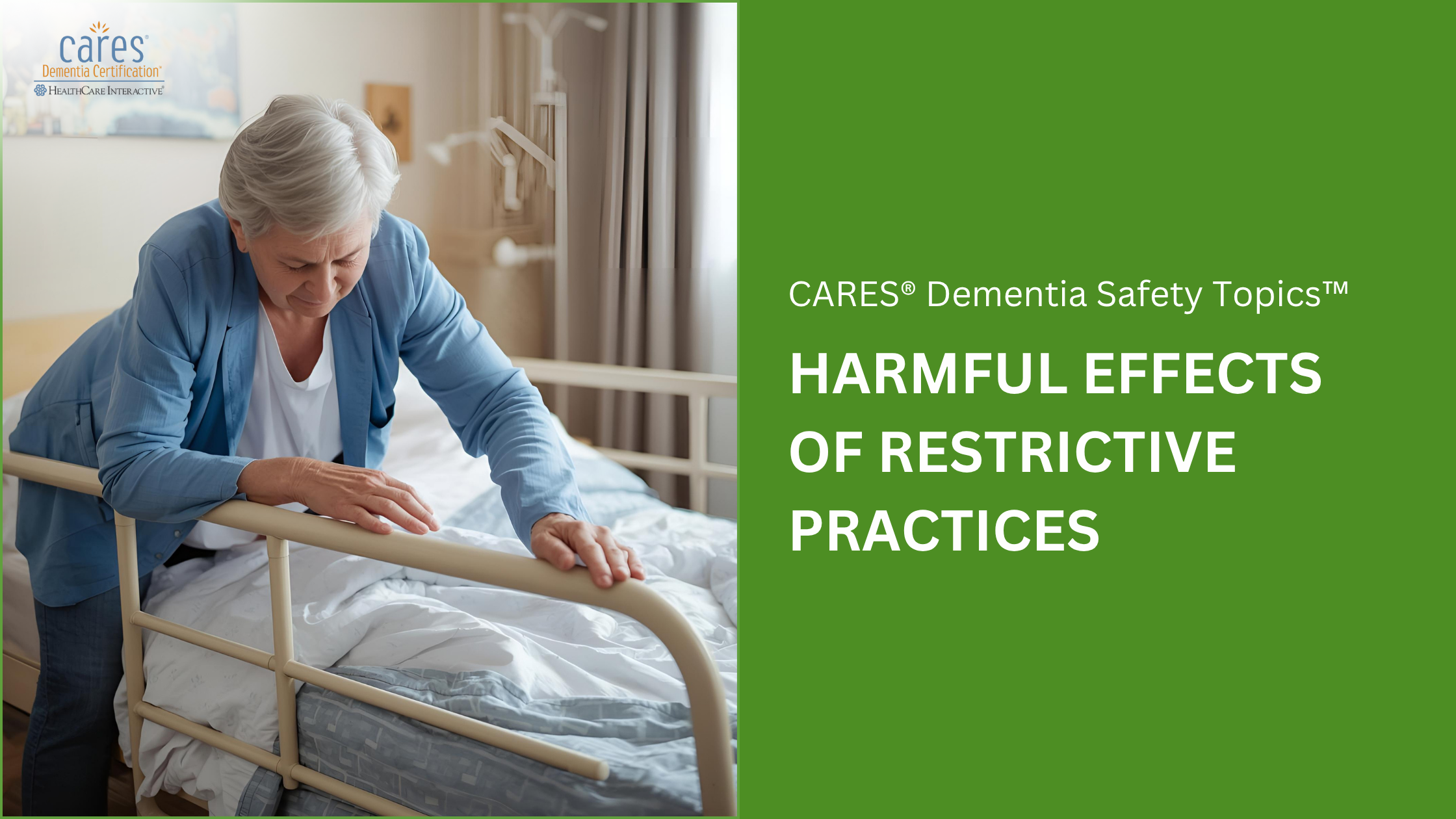
Hidden Consequences of Restraint Use in People with Dementia

Although restraints are often used in care settings to prevent harm, research and experience show that they frequently cause harm instead. People who attempt to break free from restraints can suffer severe injuries—such as broken bones, concussions, or even death. Moreover, simply sitting or lying down for too long without movement can weaken the body and mind, leading to a wide range of health problems.

Below are some of the most common and serious complications caused by physical restraints:

1. Dehydration

People who are restrained are often unable to drink water independently. Without adequate hydration, they can quickly become dehydrated, which affects every system in the body.

2. Psychological Distress

Being restrained can be deeply traumatic. Individuals may feel anxious, stressed, frustrated, agitated, lonely, or ashamed. This distress can lead to depression, social withdrawal, or even increased aggression and restlessness—the very behaviors restraints aim to control.

3. Loss of Postural Tone

Remaining in the same position for extended periods causes a loss of “vascular tone”—the ability of blood vessels to constrict properly. When a person changes position, such as from lying to sitting, blood pressure may drop, leading to dizziness, confusion, or fainting.

4. Pneumonia

Prolonged bed rest increases the risk of pneumonia. When a person lies down for too long, fluid can accumulate in the chest, making it easier for infections to develop and spread to the lungs.

5. Decreased Appetite and Malnutrition

A lack of movement often leads to a reduced appetite. Someone who was previously active may lose interest in eating, resulting in malnutrition and weakened immunity.

6. Urinary Tract Infection (UTI)

Restraints can cause or worsen incontinence. Limited mobility, lack of fluids, and an inability to use the bathroom independently all contribute to the development of UTIs.

7. Constipation

Physical activity is crucial for healthy digestion. When someone cannot move freely, the bowels slow down, leading to constipation—made worse by poor hydration and reduced appetite.

8. Incontinence

Restraints can make it impossible for individuals to reach or use the toilet in time, resulting in incontinence. Over time, this can also lead to skin irritation and infection.

9. Decreased Bone and Muscle Strength

When people are confined and unable to move, their bones lose density and muscles lose mass. This physical decline can make walking or even sitting up difficult, increasing the risk of falls and fractures.

10. Swollen Feet

People restrained in a sitting position often develop swollen feet, as fluids accumulate in the lower limbs when movement is restricted.

11. Pressure Sores

Pressure sores, or bedsores, develop when the same part of the body bears weight for too long. Redness is an early warning sign; if ignored, these sores can progress to painful, infected wounds.

12. Contracted Muscles

Without stretching and movement, muscles and tendons can shorten and stiffen—a condition called contracture. This reduces flexibility and can permanently limit mobility.

13. Decreased Functional Skills

The combined effects of these physical and psychological issues lead to a significant decline in a person’s ability to perform daily tasks—such as eating, bathing, or using the bathroom—further reducing independence and quality of life.

Conclusion

Physical restraints may seem like a safety measure, but they often create new risks and diminish dignity. Understanding the consequences of restraint use helps caregivers seek safer, person-centered care alternatives that support both well-being and autonomy.

Get 10% off on CARES® Training—learn compassionate, restraint-free strategies that promote dignity and independence for people living with dementia.
Apply code Halloween10 through November 15, 2025.